World Misophonia Awareness Day: Why This Neurological Condition Deserves to Be Understood, Not Dismissed
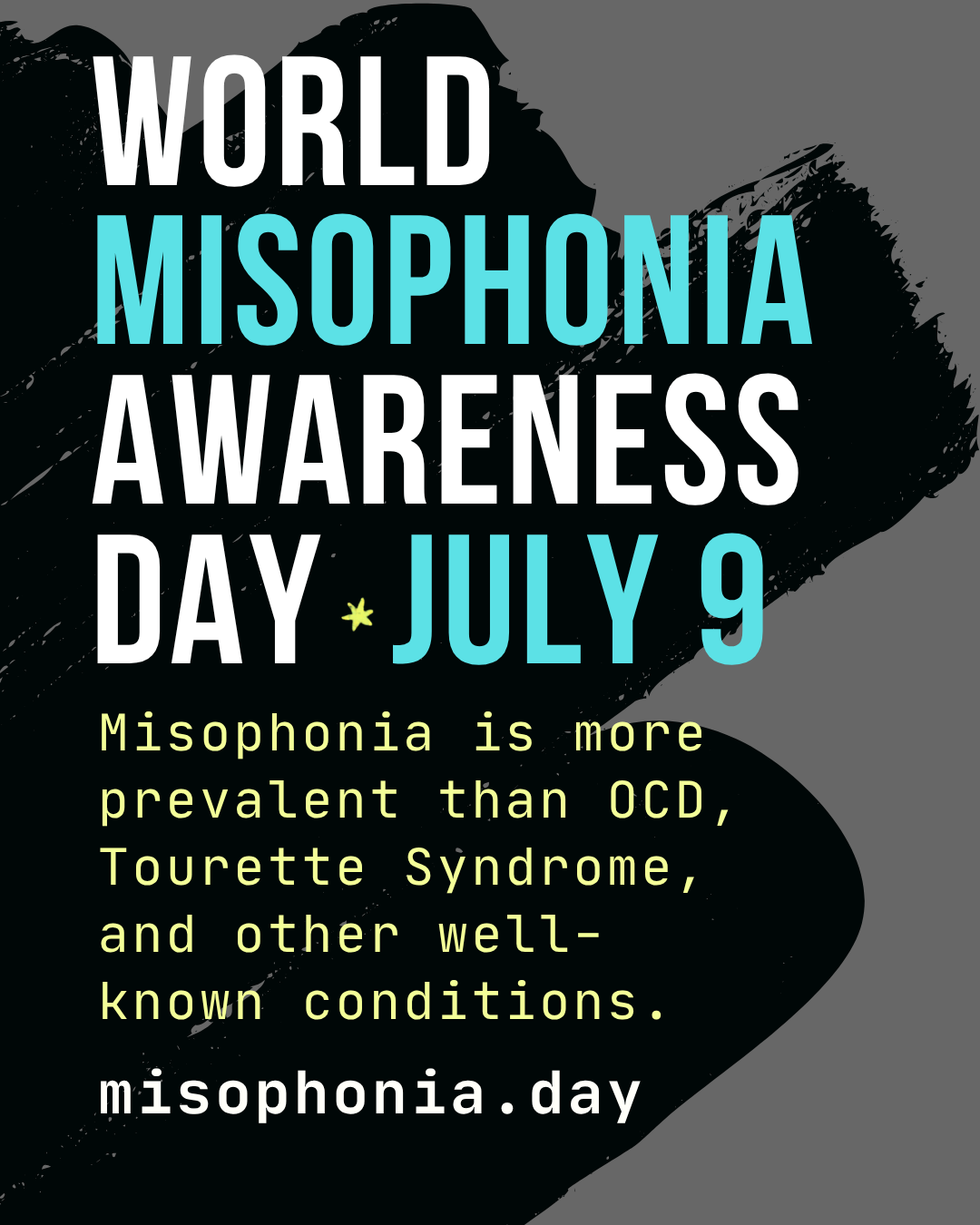
Every July 9, the misophonia community marks World Misophonia Awareness Day, and every year I find myself wanting to say the same thing louder: this is real, this is neurological, and you are not alone in it.
I have watched people I love struggle with misophonia.
I have watched siblings flinch and leave the room over a sound no one else even noticed.
I have watched parents feel helpless, guilty, and exhausted trying to keep peace at a dinner table that should have been simple.
And I have watched, over and over, the moment someone finally hears the word "misophonia" for the first time and realizes there is a name for what they have been carrying.
That moment of relief, of finally being understood, is part of why I built treatment for this into my practice.
It is personal for me, and it is one of the reasons I care so much about getting this right, for the person with misophonia and for the family around them.
What is Misophonia?
Misophonia is a disorder of decreased tolerance to specific sounds, often ordinary ones like chewing, sniffing, tapping, or breathing.
For someone with misophonia, these sounds do not just annoy. They can trigger an immediate, involuntary surge of rage, disgust, panic, or the urge to flee. It is not a preference. It is not "being dramatic."
It is not a discipline problem, a parenting problem, or a manners problem.
For a long time, misophonia was treated as though it must be purely psychological, an overreaction that a person should simply be able to talk themselves out of. Research has moved past that.
A congressional resolution recognizing World Misophonia Awareness Day this year specifically noted that misophonia is associated with atypical connectivity in the brain between sensory processing regions and the areas responsible for emotion regulation, which helps explain why the reaction to a benign sound can feel so intense and so outside a person's control.
Misophonia Research from Duke Center
The Duke Center for Misophonia and Emotion Regulation, one of the leading research institutions studying this condition, has helped establish that misophonia has a real neurological signature.
Neuroimaging studies point to atypical activity and connectivity in the anterior insular cortex, the brain region responsible for processing emotion and interoceptive signals, along with heightened connectivity between that region and the auditory cortex.
In plain terms, the brain of someone with misophonia is processing trigger sounds and routing them straight into an emotional alarm system, faster and more intensely than most people's brains do.
That is not a willpower issue. That is neurology.
Misophonia typically starts to show up between ages nine and thirteen and tends to be lifelong without support.
Research suggests that some degree of misophonia symptoms may affect up to one in five people, with a smaller percentage experiencing symptoms severe enough to significantly disrupt daily life, work, school, and relationships.
And yet, it remains widely under-diagnosed.
Many of the people I have met, both in my personal life and in my practice, had never even heard the word before I shared it with them.
The relief on their face in that moment is something I will not forget.
How Misophonia Affects the Whole Family
Here is something the research confirms and every family living with misophonia already knows: this does not just affect one person.
It reshapes how a family eats together, travels together, and exists in shared spaces.
Siblings feel like they are constantly walking on eggshells.
Parents feel torn between protecting one child's nervous system and not wanting another child to feel like they cannot exist normally in their own home.
Partners feel confused and sometimes hurt by reactions that seem disproportionate until they understand what is actually happening in the brain.
I cannot overstate how hard this is to navigate as a family, and I do not think that gets said enough.
It is not a small accommodation.
It touches meals, car rides, classrooms, holidays, and quiet moments that should not be fraught.
Families deserve real tools, not just an explanation.
Find Treatment for Misophonia with The And Way Therapy
We offer misophonia treatment for adults and teens in Austin, Dripping Springs, and virtually across Texas and Florida, using Inference-Based Cognitive Behavioral Therapy (I-CBT), a targeted, evidence-based approach for misophonia rather than a generic anxiety protocol.
We also offer therapy for the loved ones and family members of people with misophonia.
This work focuses on tangible, practical tools: how to reduce conflict around trigger sounds, how to support a family member without walking on eggshells indefinitely, and how to rebuild a shared sense of safety and connection at home.
Misophonia is a family experience, and we believe treatment should reflect that.
If misophonia has been part of your family's story, whether you are the one with the triggers or the one loving someone who has them, I want you to know this: it has a name, it has a neurological basis, and it has treatment.
You are not overreacting, and you are not alone.
Reach out if you would like to talk about treatment for yourself, your teen, or your family.
Learn more from two organizations doing excellent work in this space: the Duke Center for Misophonia and Emotion Regulation and soQuiet, a nonprofit dedicated to misophonia advocacy, education, and support.
Happy World Misophonia Awareness Day. Let's keep talking about this until it is not misunderstood anymore.
Frequently Asked Questions
About Misophonia
-
Misophonia is a condition where specific sounds, often everyday sounds like chewing, sniffing, tapping, breathing, or clicking, trigger an intense emotional and physical reaction.
For some people, the response may feel like anger, panic, disgust, anxiety, or an urgent need to escape.
Misophonia is not simply being annoyed by sounds. It is a real sound sensitivity disorder that can affect daily life, relationships, school, work, and family routines.
-
Research suggests that misophonia involves differences in how the brain processes certain trigger sounds and connects those sounds to emotional and physical alarm responses.
This helps explain why the reaction can feel so immediate and outside of a person’s control.
Understanding misophonia as neurological can reduce shame and help families respond with more compassion and better tools.
-
Common misophonia triggers can include chewing, swallowing, sniffing, breathing, coughing, tapping, keyboard clicking, pen clicking, or repetitive mouth sounds.
Triggers are different for each person, and they are not always limited to sound. Some people may also react to related visual cues, such as seeing someone chew or fidget.
-
Yes, therapy can help people with misophonia better understand their triggers, reduce conflict, build coping tools, and respond to sound sensitivity with more flexibility and less shame.
Misophonia treatment may include I-CBT-based strategies, emotion regulation skills, family support, and practical planning for daily life.
At The And Way Therapy, we use a specialized approach that may include I-CBT-informed work, depending on the client’s needs, symptoms, and treatment goals.
-
It may be time to seek misophonia treatment if sound triggers are interfering with daily life, causing family conflict, leading to avoidance, affecting school or work, or making the person feel ashamed, isolated, angry, or out of control.
You do not have to wait until things feel unmanageable.
Therapy can help you name what is happening and begin building tools for yourself, your teen, or your family.

Written by Kelsey Blahnik, LCSW-S
Kelsey Blahnik, LCSW-S, is the founder of The And Way Therapy, an OCD and trauma specialty practice in Austin and Dripping Springs, Texas, offering in-person and virtual care across Texas and Florida.